Meetings
What did we agree on?
Find the decision and jump to the part of the call where it was discussed. Record both sides without a bot joining the meeting.
How recording works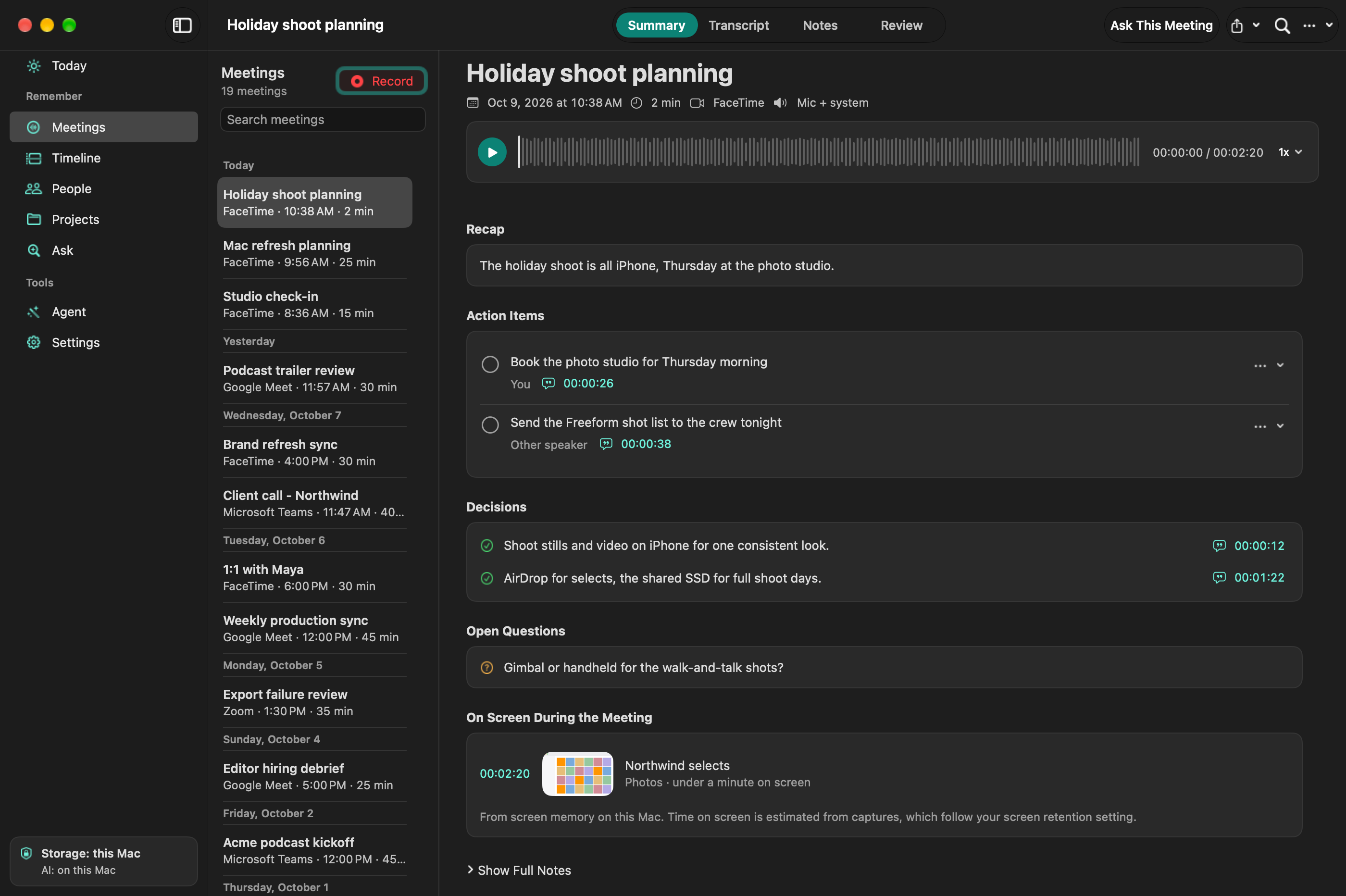
 LokalBot
On-device work memory
Meeting notes, searchable screen memory, and dictation, all running locally by default. Your AI agents can search it too.
LokalBot is a desktop app for Mac, with Windows and Linux in alpha. Send this page to your computer with AirDrop, Messages, or Notes, or .Copy the link and open it on your computer.
Apple Silicon · macOS 15+ · Windows and Linux in alpha
A quick look
A 45-second tour: what LokalBot keeps, the local models that do the work, and the real app in use.
Meetings
Find the decision and jump to the part of the call where it was discussed. Record both sides without a bot joining the meeting.
How recording works
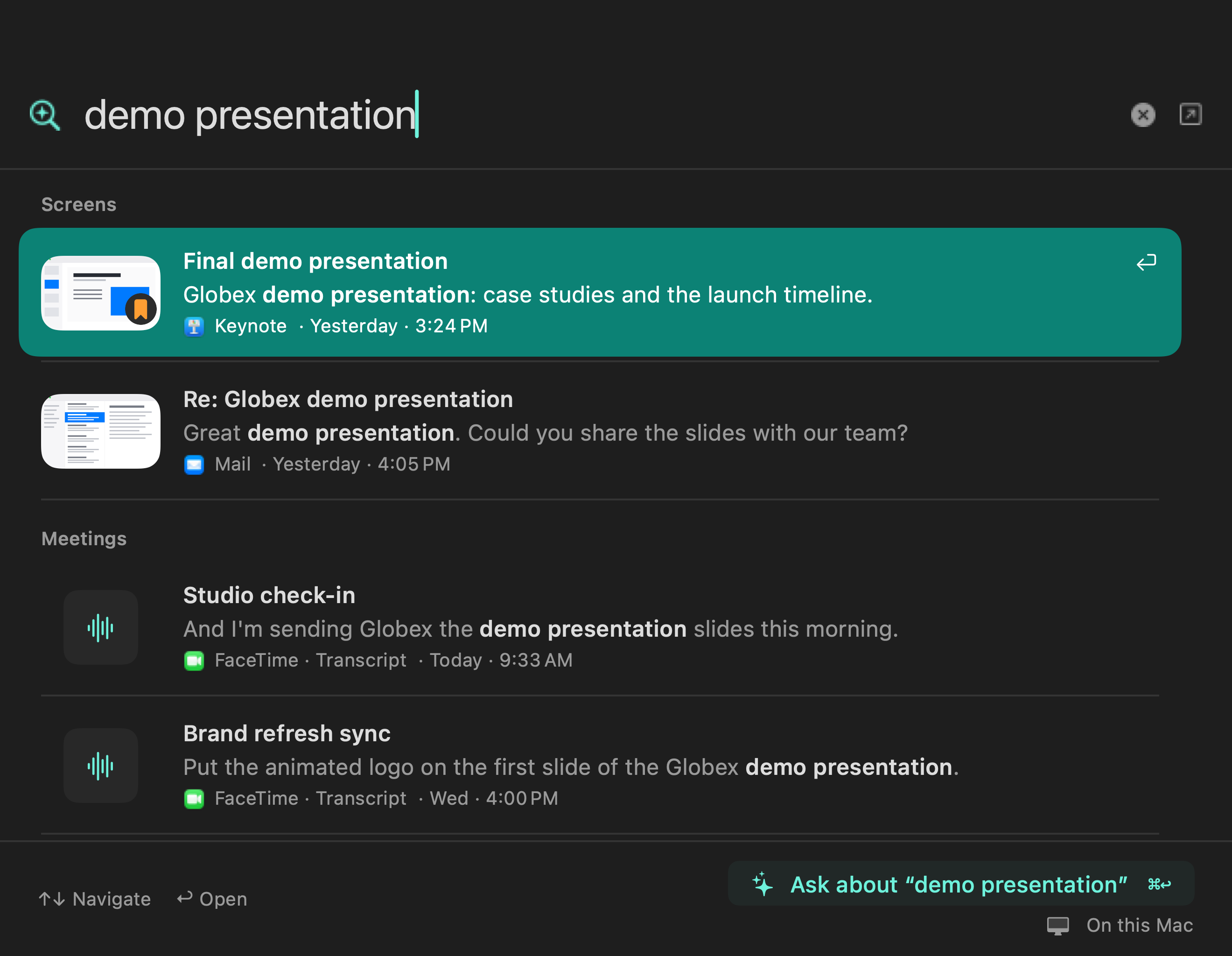
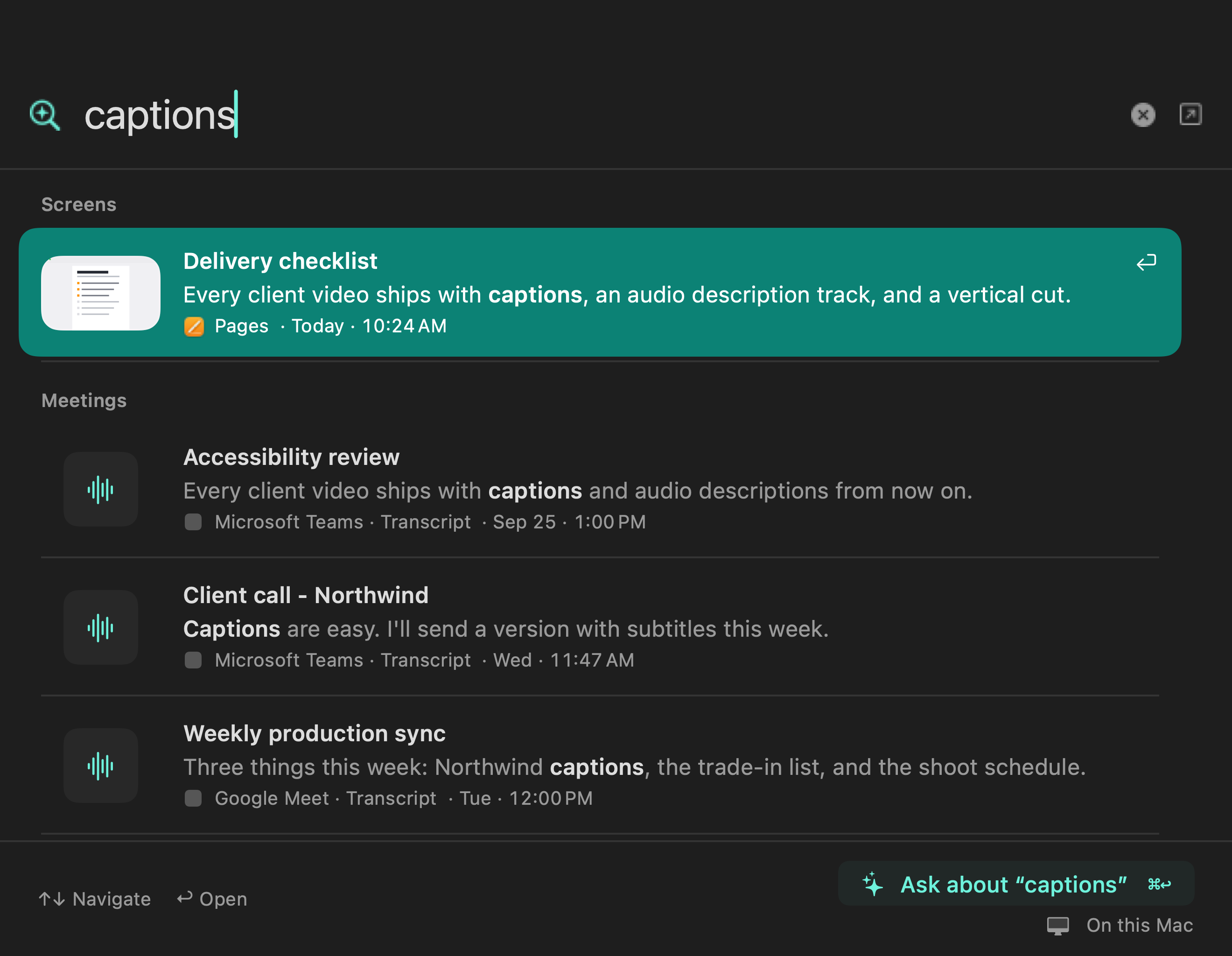
Saved screen text
Find a page by a word you remember, even when you’ve forgotten its title. Search what you saw on screen and open the matching moment.
Screen text and screenshots are optional. You choose which apps and sites to exclude.
Today
Review the day's summary and open action items without reading every transcript again. Open the timeline when you need to retrace your day.
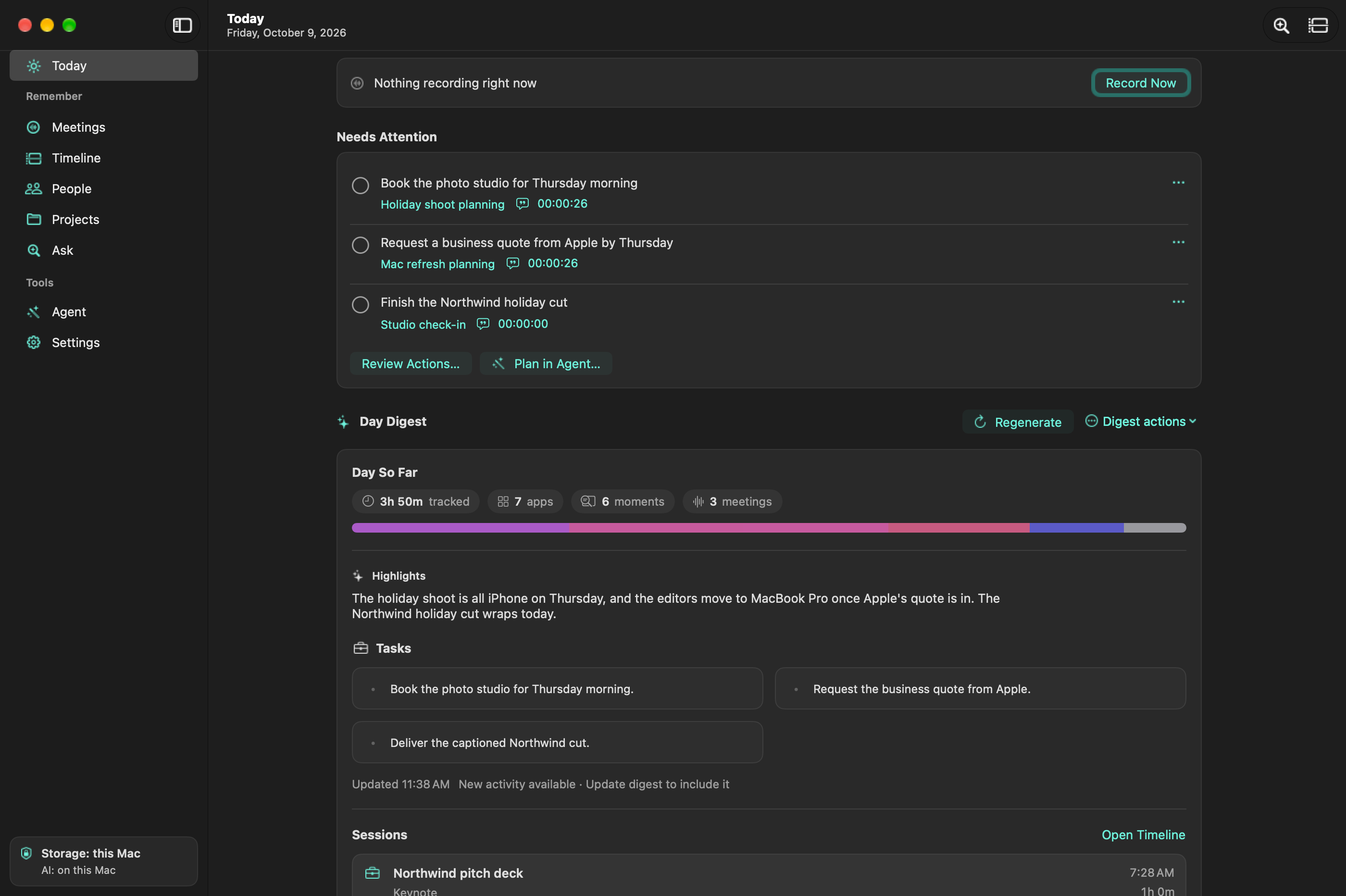
Screenshots show the app with example data. Select an image to see it full size.
Hold ⌥ Space (Alt+Space on Windows and Linux), say what you want to write, and release. The words appear at your cursor. Dictation runs on your computer.
Optional autocomplete suggests the next words as you type. Press Tab to accept. It uses a dedicated local model by default.
Turn a meeting into a follow-up draft or a weekly work log. Local routines save drafts to a folder you choose. You review and send them.
Agent access
Claude Code, Codex, or any MCP client can search your meetings through the bundled lokalbot-cli or its MCP server. Ask what was decided, who owns an action item, or where a topic came up.
# Connect Claude Code over MCP
$ claude mcp add lokalbot -- lokalbot-cli mcp

# Or search from any shell or agent
$ lokalbot-cli search "database decision"
$ lokalbot-cli actions --owner me
Under the hood
A 25-second look at the local models that do the work: Nemotron tells speakers apart, Qwen3-ASR transcribes, Qwen3.5 summarizes, EmbeddingGemma 2 searches by meaning, Apple Vision reads screen text if you opt in, and Gemma 4 E2B finishes your sentences. About 9.6 GB of model files if you use every role, all on your Mac. Windows and Linux run the same jobs with their own local models, about 4 GB by default.
Privacy
Recording, transcription, and the built-in models run on your computer. Screen text and screenshots are optional. You choose what to capture and how long to keep it.
Models and updates need a download. If you choose a remote model, the app asks before sending it context. Agent commands and external tools have separate permissions and data handling.
Switching
The same bot-free capture, but transcription and summaries run on your computer. No account or subscription.
Nothing joins your call, the audio stays on your computer, and there are no minute caps.
Notes records your microphone, so with headphones on it misses the other side of the call. LokalBot records both sides and keeps every meeting searchable.
Rewind's Mac app is discontinued. LokalBot starts with app and window activity; screen text and screenshots are opt-in and deleted after 14 days by default.
Also open source and local. Here the local AI ships built in, and speaker separation, meeting detection, and MCP access are free.
Dictation runs on your computer and comes with meeting notes and recall, for free. For transcribing files you already have, MacWhisper is the better tool.
Competitor details were last verified on September 24, 2026, and on October 1, 2026 for Apple Notes, Meetily, and Wispr Flow. All comparisons
Free and open source. No account or subscription.
Download for Mac.dmg installer · or with Homebrew: brew install --cask stevyhacker/tap/lokalbot
macOS · Windows · Linux (alpha) · Release notes
Apple Silicon (M1 or later) with macOS 15+ · Windows 10 or 11, x64 · Linux x86_64
Windows and Linux are in alpha. Models download during setup, and local processing can work offline afterward.
New installs start with activity-only tracking. You can turn tracking off, save visible text without pictures, or add encrypted screenshots. Text and screenshots are opt-in. Excluded apps and sites, password managers, and focused password fields are skipped. Private browser windows are captured like any other window, so exclude the browser or site to keep them out. Captured text and screenshots are deleted after 14 days by default. Moments you explicitly save stay until you unsave or delete them.
Recordings and built-in processing stay local. Network access covers model downloads, update checks, and optional agent setup. A remote model receives the context needed for a request only after you approve its server. Approved agent commands can also access the network. Connected CLI or MCP tools have their own data handling; meeting and screen-memory access have separate permissions. See the privacy policy.
Yes. Start with the built-in local models, choose another downloaded model, or connect Ollama, an OpenAI-compatible server, or, on Mac, Apple Intelligence. Summaries and chat can also run on your own ChatGPT or Claude plan, with no API key. A remote server or plan gets context only after you approve it. Transcription, summaries, and autocomplete have their own model choices. See the transcription model guide and offline setup guide.
Yes. LokalBot is free and open source under GPLv3. There is no account, subscription, or LokalBot server. See the fact sheet for what it includes.
Apple Silicon Macs (M1 or later) with macOS 15 or later, plus Windows 10 and 11 (x64) and 64-bit Linux in alpha. Intel Macs are not supported, and a few features are Mac only for now. Check the system requirements for memory, disk space, and what each platform supports.
No. LokalBot records your microphone and the meeting's audio on separate tracks; on Windows and Linux the second track is everything your computer plays. Let participants know you're recording and get their consent. Read how recording works.